





Blogs
Bullseye targeting for Amazon polls
Test your listing with the shoppers who'd actually buy it. How to pick the right audience for an Amazon poll, step by step.
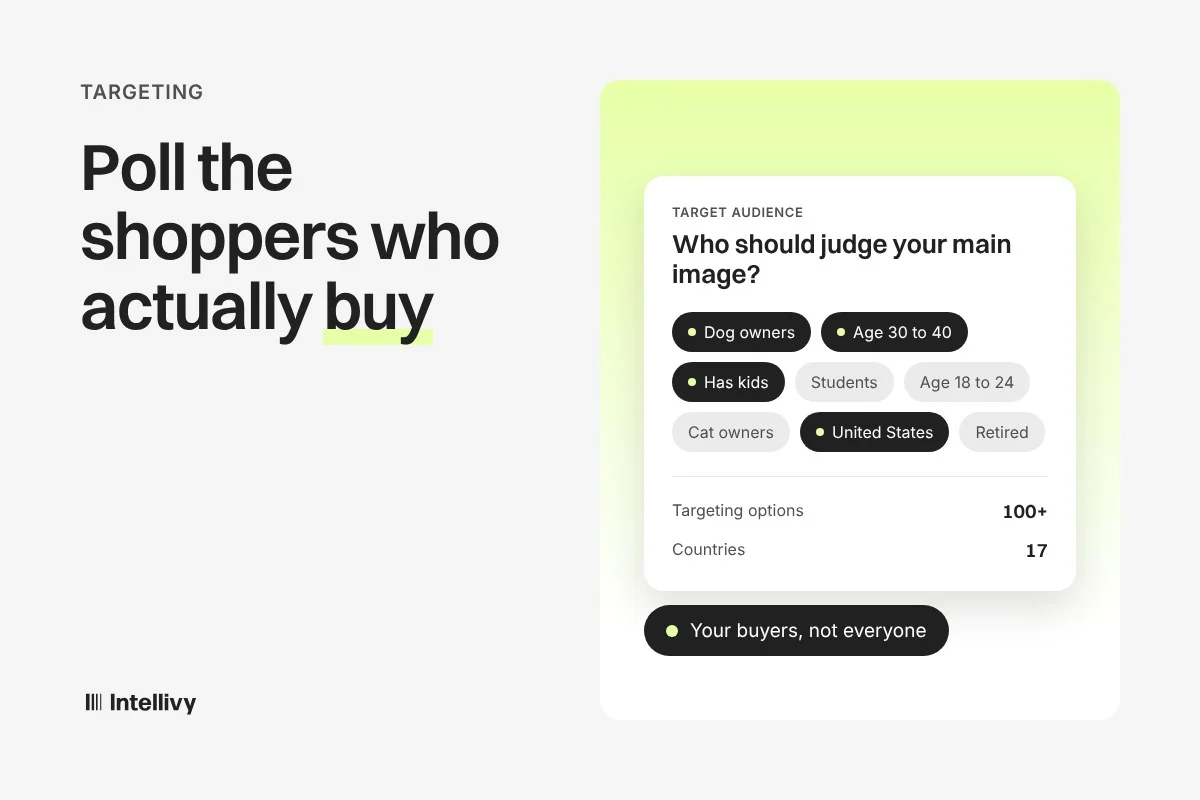
Test your listing with the shoppers who would actually buy
Bullseye targeting means you run a poll with shoppers who match your real customers, instead of the general public. A dog leash for families gets judged by dog owners with kids. A fitness tracker gets judged by people who train. The answers get sharper, because the people giving them are the ones you sell to.
A broad poll tells you what most people think. That’s useful early on. But once you know who buys from you, their opinion is the one that moves your conversion rate. A main image that wins with everyone can still lose with the 35-year-old runner who actually clicks Buy Now.
Why does the audience change the answer?
Different shoppers look for different things. A parent checks whether the leash is safe for a child to hold. A single dog owner checks the length and the clip. Show both groups the same two main images and they can pick different winners.
Aim at the whole dartboard and you get an average. Aim at the bullseye and you hear from the smaller group that makes up most of your sales. That’s what you want to build your listing on, and it keeps ad spend focused on shoppers who are likely to convert.
Start with who already buys from you. If you’re brand-registered, Amazon’s Brand Analytics shows the demographics of your buyers, such as age, gender and household income. Use those as the starting point for your poll audience. In Seller Central, look for Brand Analytics under the Brands menu.
How do you pick the right audience for a poll?
- Describe your buyer in one sentence. “Dog owners aged 30 to 40 with kids” works. “Everyone who likes dogs” doesn’t.
- Choose how specific you need to be. Intellivy offers 100+ targeting options across 17 countries. Age and gender segmentation is free on the Business plan.
- Set the traits that matter for this decision. Pick the ones that change how someone judges the product, not every trait you can think of.
- Check the price before you launch. You see the total before you start the poll. Prices start at $0.65 per shopper on every plan.
- Split the poll if you sell to more than one group. Two separate polls give you two clear answers. One combined poll targets a niche that may not exist.
Plan for timing. Most polls return answers in 24 to 48 hours.
What does bullseye targeting look like in practice?
A fitness tracker for active men who like tech. Before you pick a main image, run a Dual Comparison Poll with men who work out and buy gadgets. They’ll notice whether the screen looks readable mid-run. A general audience mostly judges the color.
A kid-friendly dog leash. Target dog owners aged 30 to 40 with children. Ask them with a Purchase Barrier Poll what would stop them from buying. Their answers tell you which safety detail belongs in your second image and your first bullet.
When the product has two audiences, run two polls. The same fitness tracker might also sell to older men who track their heart rate. Poll each group on its own. Mixing them gives you an answer from a buyer who doesn’t exist.
Frequently asked questions
When should I use a broad audience?
Early in product development, or when your product sells to almost everyone. A broad poll gives you a quick general read.
How many traits should I select?
Only the ones that change how someone judges your product. Every extra trait narrows the group without always improving the answer.
Can I target shoppers outside the US?
Yes. Intellivy reaches 55M+ real consumers in 17 countries.
Find out what your buyers need to see
Run your first targeted poll and get answers from real consumers in 24 to 48 hours.
Related: Image Stack Poll best practices · Top questions for polls
Related articles
-
Blogs
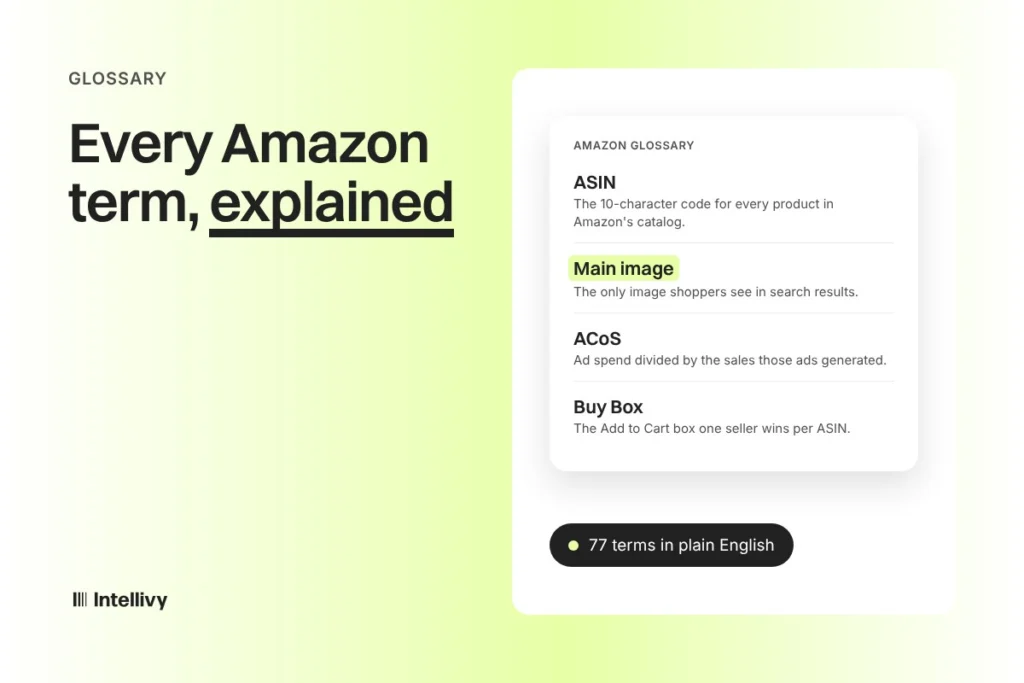
Amazon glossary
ASIN, BSR, ACoS, Buy Box: plain definitions of the Amazon terms sellers use every day, and what each one means for your conversion.
Read more: Amazon glossary -
Blogs
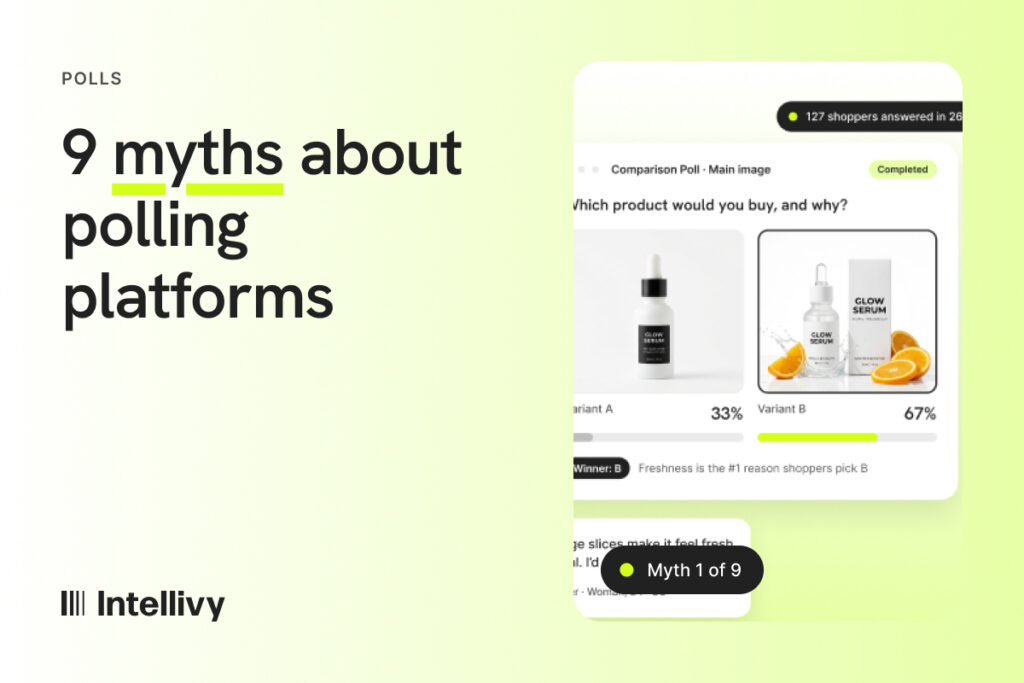
9 Things Amazon Sellers Believe About Polling Platforms That Simply Aren’t True
We address all 9 of them directly. Because making listing decisions without real data is one of the most expensive things an Amazon seller can do.
Read more: 9 Things Amazon Sellers Believe About Polling Platforms That Simply Aren’t True -
Blogs
In-Home Product Testing: The Smarter Way to Launch Winning Products
Reduce risk and validate market fit with in-home usage testing. Learn how in-home product testing helps sellers launch with confidence.
Read more: In-Home Product Testing: The Smarter Way to Launch Winning Products